Electric Bike Insurance UK: Battery, Motor, Home and Away
UK electric bike insurance, including e-bike cover at home and away: battery and motor wording, EAPC class, and why a standard bicycle policy often is not enough.
By Tom Brennan
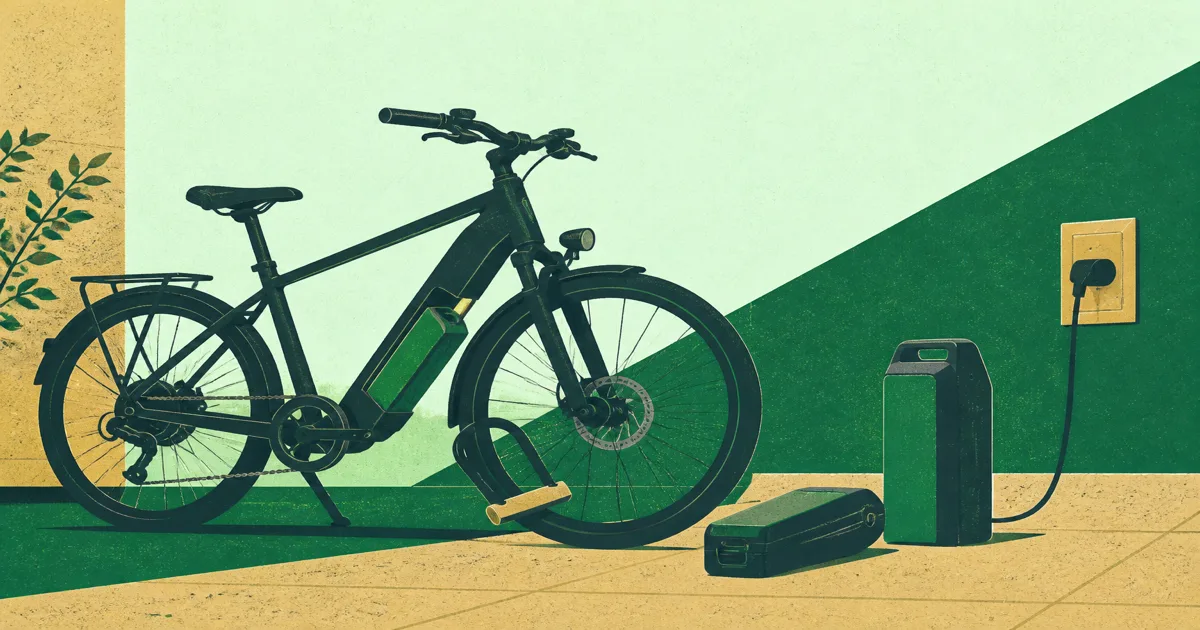
The short answer: Electric bike insurance in the UK is specialist cover for pedal-assisted bikes with a motor and battery, at home and away. Check battery wording, motor damage, EAPC class, and overnight parking rules before you buy. A basic bicycle or home policy often will not replace a stolen pack on its own.
E-bikes cost more than many analogue bikes, and the expensive parts are easy to target. UK search volume for electric bike insurance and ebike insurance is high for a reason. Riders want clarity on theft, crash damage, and whether the electrical kit is included.
There is also a legal layer that ordinary cycle insurance rarely has to think about. UK law defines an "electrically assisted pedal cycle" (EAPC) by power and speed limits, and a bike outside those limits is not legally a bicycle at all. That single fact shapes almost every insurance question in this guide.
Why e-bikes need a closer read of the schedule
A standard bicycle insurance policy may accept some e-bikes and exclude others. Exclusions often hinge on continuous rated power, assisted speed, or whether the bike can be propelled by the motor alone. If you are still on the yes-or-no, start with do ebikes need insurance before you compare schedules.
If your bike sits outside the insurer's definition of a pedal cycle, you may be offered the wrong product or have a claim declined later. Start with the manufacturer's class and the insurer's definitions side by side.
EAPC rules in the UK generally cap continuous power at 250 watts and assistance cutoff at 15.5mph. Bikes that exceed either figure, including some imported or tuned models, may need moped-style insurance and registration instead of cycle cover.
EAPC class vs motorcycle class: the risk that voids cover
This is the single most consequential distinction in electric bike insurance. A compliant EAPC, one that only assists up to 15.5mph and caps continuous power at 250 watts, is legally a pedal cycle. An e-bike that exceeds either limit is not, and it may need registration, an MOT, road tax, and motorcycle-style insurance instead.
The risk is not theoretical. Derestricted motors, aftermarket tuning kits, and some imported models marketed loosely as "e-bikes" can push a machine outside EAPC limits without the rider fully realising it. If that happens, a standard electric bike insurance policy written for pedal cycles may not respond to a claim at all, because the bike no longer meets the legal definition the policy was written around.
Insurers generally do not distinguish between deliberate tuning and an unknowing purchase. If the bike is capable of assistance beyond EAPC limits, some schedules treat that alone as grounds to decline a claim, regardless of how the bike was actually being ridden at the time of loss.
Before buying cover, check the manufacturer's specification sheet for continuous rated power and the assistance cutoff speed, and compare both figures against the EAPC limits directly. If you have any doubt, especially with an imported or heavily customised e-bike, ask the insurer in writing which class they consider it and keep that confirmation with your policy documents.
Battery cover: what is typically included and what is not
Batteries are a frequent blind spot in electric bike insurance. Some policies cover a battery only when it is locked to the bike, only when kept indoors overnight, or only up to a sub-limit that sits well below the cost of a genuine replacement pack. Spare batteries kept at home separately from the bike may need a contents claim instead of a cycle insurance claim.
Theft of a detachable battery on its own, without the bike, is treated differently by different insurers. Some pay out on a stolen battery as a standalone claim; others only respond if the whole bike is taken. Ask this question directly during the quote process rather than assuming either answer.
Accidental damage to a battery from water ingress, a hard crash impact, or a dropped bike is usually covered where the policy includes electrical components, but corrosion and gradual capacity loss from normal charging cycles are almost always excluded as wear and tear rather than an insurable event.
Chargers and aftermarket battery upgrades should be listed separately if they carry meaningful value. Keep proof of purchase for the bike and for any battery replacement, since a mismatched or unlisted higher-capacity battery can complicate a claim if the insurer was never told about the upgrade.
Motor and drive system cover
Motors and controllers can be treated as integral parts of the bike or as separately insured items, depending on the policy. After a crash, repair costs often centre on these electrical components rather than the frame itself, so confirm accidental damage explicitly extends to the motor, controller, and wiring harness, not only to the frame and mechanical parts.
Motor damage from a genuine accident, such as a fall that cracks the housing or severs a cable, is typically treated the same as any other accidental damage claim, subject to the policy's usual excess and conditions. Motor failure with no external event behind it is a different question, and insurers often treat that as a manufacturing or wear issue for the warranty to handle, not a claim for the insurance policy.
Water damage to a motor from riding through deep flooding, rather than normal wet-weather use, may be excluded or scrutinised closely, since manufacturers set specific guidance on water resistance ratings that insurers sometimes reference when assessing a claim.
Battery degradation is a separate issue from damage. A battery that gradually loses range over two or three years of normal use is wear and tear, not an insurable event, so do not expect a claim to fund a routine replacement.
Theft patterns unique to e-bikes
E-bikes are attractive to thieves because resale value is high. Secure parking at work and overnight storage matter even more than for a cheap hybrid. Sold Secure locks and immovable anchoring still apply on most specialist policies.
Detachable batteries create a second theft problem. Some riders remove the battery when parking. Check whether that helps or hurts your cover, and whether a stolen battery alone is claimable.
GPS trackers and registration schemes do not replace lock requirements, but they can help recovery and claims evidence.
Cargo and family e-bikes add another wrinkle. They are heavier, harder to carry away quickly, but also carry higher values and sometimes child seats or panniers worth insuring alongside the frame itself.
Home insurance and Cycle to Work overlaps
Higher e-bike prices push many riders past typical single-item contents limits. Our guide to home insurance and bikes explains why a £2,000 to £4,000 e-bike often needs dedicated cover.
People also search electric bike insurance home and away when they want one product that follows the bike out of the hallway. Dedicated e-bike policies are usually built for that pattern: riding to work, locking at a station, and sleeping indoors overnight. Home contents is often the opposite. It may be reasonable inside the house and thin once the bike is in a public rack.
Read both locations on the schedule. Indoor overnight storage, workplace racks, and unattended street parking are three different risks. A policy that pays for a hallway theft can still refuse a station theft if the lock grade or overnight-away rule is missed.
If you obtained the bike through a Cycle to Work scheme, confirm who insures it during the hire period. Employers and scheme providers sometimes give guidance, but the policy still has to match the bike you ride.
Liability and riding use
Public liability can matter if you commute in dense traffic or ride in groups. Check the limit and whether delivery or hire-and-reward use is excluded. Most personal e-bike policies are not written for courier work.
Off-road use, organised events, and foreign travel may need optional extensions. If you ride trails on an electric mountain bike, say so when comparing policies rather than hoping a leisure clause stretches far enough. Use electric mountain bike insurance for the eMTB-specific checklist.
Food delivery riders in particular should not assume a personal e-bike policy protects them while working. Gig economy platforms sometimes provide limited cover, but it rarely matches what a dedicated commercial policy would pay out.
How much electric bike insurance usually costs
Price is not one national figure. Insurers weigh declared value (bike plus battery), where you park overnight, lock grade, excess, and local theft risk. A £3,000 commuter e-bike in a high-theft postcode will not price like a lower-value leisure bike stored in a locked garage.
For a fuller breakdown of premium drivers, see electric bike insurance cost. Use that guide to sanity-check quotes, then still compare cover wording. The cheapest monthly figure is a poor win if battery theft is excluded.
How to compare electric bike insurance quotes
Match the declared value to a realistic replacement cost including a like-for-like battery. Compare excess, theft away from home, accidental damage to electrical parts, and security conditions.
Ask whether firmware-bricked batteries after water ingress are treated as accidental damage or wear. Wording varies, and this is where cheap policies sometimes disappoint.
Avoid motorcycle quote forms that appear under "bike insurance." You want pedal-assist cycle cover, not motorbike insurance.
Common exclusions to watch
Wear and tear, gradual battery degradation, and corrosion are usually excluded. Racing or time trials may be excluded unless endorsed. Modifications that raise assisted speed beyond the insured class are a serious red flag.
Unattended overnight parking outside approved locations remains one of the most common claim disputes across cycle insurance, e-bikes included.
Practical buying checklist
- Confirm the insurer accepts your e-bike class.
- Check battery and motor wording explicitly.
- Match overnight storage and lock rules to how you actually park.
- Decide whether liability cover matters for your commuting pattern.
- Keep serial numbers, battery IDs, and purchase proofs offline.
Commuting with an e-bike through winter
Wet winters increase crash and electrical-damage questions. Check how water ingress is treated and whether you must follow manufacturer charging guidance for cover to respond.
Workplace parking for heavier e-bikes is limited in many offices. If you leave the bike in a public rack all day, match lock grades and remove the battery only if the policy still covers a stolen battery kept with you.
Charging habits also matter for a different reason: several UK insurers now ask whether you charge indoors overnight, reflecting wider fire-safety guidance around lithium battery storage. Answer honestly, since it can affect a claim after a fire.
Second-hand e-bikes and proof of ownership
Buying used is common. Insurers may ask for more proof: original receipts if available, bank transfers, and clear serial photos. A vague marketplace screenshot is weak evidence after a total loss.
If the seller cannot show a serial number, walk away. Insurance will not fix a bike you cannot identify.
A used e-bike also needs its own battery health check before you buy. A tired battery lowers the bike's real value, and an insurer valuing the bike at the original retail price may query a claim if the battery was clearly near end of life.
Cargo and family e-bikes need their own conversation
Cargo e-bikes carrying children or shopping loads are becoming common on UK streets, and they raise questions a standard commuter policy was never written to answer. Child seats, rain canopies, and cargo boxes can add real value on top of the frame and motor.
Ask specifically whether a cargo e-bike is accepted at all before you buy one. Some specialist insurers treat them as a distinct category with their own security and storage requirements, since they are harder to carry indoors overnight than a lighter hybrid. For the dedicated e-cargo path, see electric cargo bike insurance.
Rental and subscription e-bikes
E-bike subscription services are growing alongside outright purchase. If you subscribe rather than own, check who is responsible for theft and damage under the rental agreement before assuming your personal insurance needs to step in at all.
Some subscription providers bundle basic cover into the monthly fee, but the excess and exclusions can be steep. Read that agreement with the same care you would give a Cycle to Work hire contract, since the two work in similar ways.
Manufacturer warranty is not insurance
A manufacturer's warranty on the motor or battery covers manufacturing defects, not theft, accidental damage, or crash repairs. Riders sometimes assume a two-year battery warranty means they are covered if the bike is stolen, which is not how warranties work.
Keep warranty documents and insurance documents separate in your mind and on your shelf. They answer different questions, and a claims handler will ask about the right one depending on what actually happened to the bike.
Soft next steps
Browse related Pedly guides on the blog, including do ebikes need insurance, bike theft prevention, bicycle insurance, and Cycle to Work.
Frequently Asked Questions
Do I need separate electric bike insurance?
Often yes if your bike has a motor and battery, or if a standard cycle policy excludes e-bikes. Even when e-bikes are allowed, batteries and motors may need explicit cover.
Does home insurance cover an e-bike?
Sometimes as a contents item, but single-item limits and away-from-home rules often fail higher-value e-bikes. Check the schedule before relying on it.
Are faster e-bikes harder to insure?
Speed class and whether the bike is treated as a pedal cycle or something closer to a moped can change the product you need. Confirm the legal class and the insurer's definition.
Does electric bike insurance cover the battery?
Not always automatically. Some policies cover the battery against theft or accidental damage only if it is listed, or only when attached to the bike. Read the wording.
Is ebike insurance the same as electric bike insurance?
Yes in practice. Searchers use both spellings. The cover question is the same: motorised pedal assistance under the policy's definitions.
Do I need to tell my insurer if I upgrade the battery?
Yes. A higher-capacity replacement battery changes the bike's value and sometimes its power output, both of which the insurer needs to know before a claim, not after one.
What happens if my e-bike is modified to go faster than its legal class?
Most insurers will decline theft and damage claims on a bike modified beyond its EAPC (electrically assisted pedal cycle) limits, since it may no longer be legally classed as a bicycle at all.
How much does electric bike insurance cost in the UK?
Premiums move with declared value, postcode theft risk, storage, and excess. See our electric bike insurance cost guide for the drivers, then compare schedules rather than one headline monthly figure.
Does electric bike insurance cover the bike away from home?
Dedicated e-bike policies are usually written for riding and parking away from home, subject to lock and overnight rules. Home contents is often weaker once the bike leaves the property. Match the schedule to workplace racks, stations, and sheds, not only the hallway.